
Punchestown racecourse guide
Punchestown Racecourse Lay Betting Guide: Jumping rhythm, stamina, field position and ground
A horse-geek Punchestown Racecourse guide for lay betting research, covering jumping rhythm, stamina, field position and ground, under-cap lay checks, protected profiles, and race-shape traps.
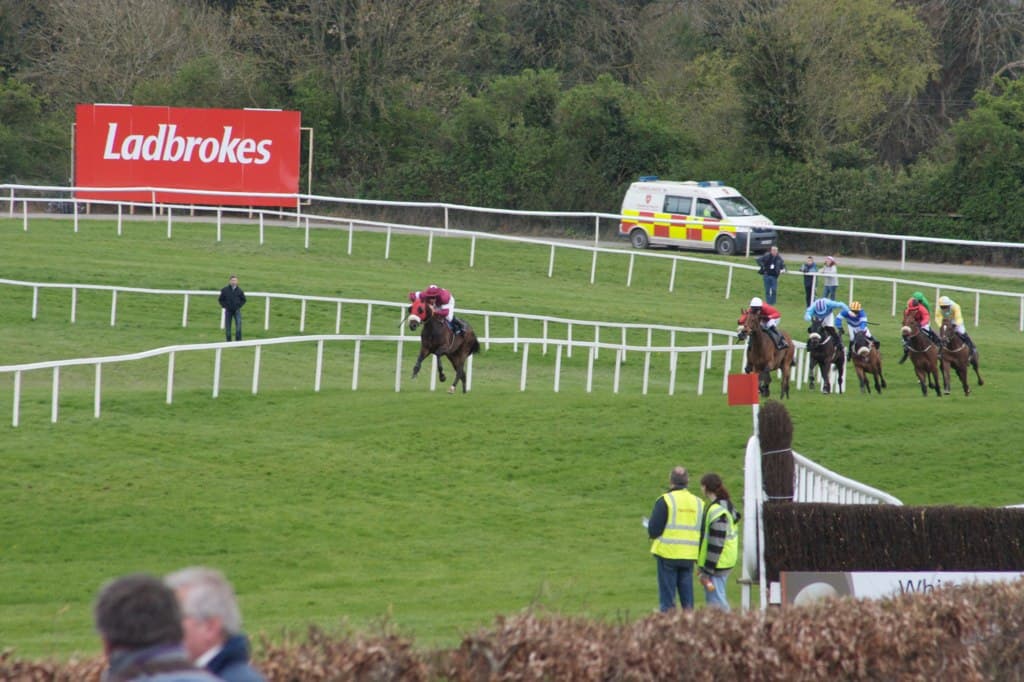
Location
County Kildare, Ireland
Code
Jumps
Direction
Right-handed
Racing
National Hunt
Shape
Large, galloping right-handed championship jumps track
Run-in
Long, stamina-testing finish
Quick lay view
Punchestown is a serious Irish jumps test where stamina, jumping rhythm, and festival field depth can all undermine a short favourite. For lay betting, the useful edge is spotting horses whose profile is fashionable but not yet proven for a right-handed, competitive, stamina-revealing setup.
Class and stamina are protected; question short runners with jumping or depth doubts in strong fields.
Horse-geek notes
Punchestown can reward high-class jumpers, but it also exposes horses that make small errors when the tempo rises.
Right-handed rhythm matters. A horse that edges left or lacks fluency around turns should not be treated as fully protected.
Irish festival races can contain deep opposition, making short favourites less dominant than their headline form suggests.
Stamina is not only distance; it is the ability to jump and finish after pressure has built through the race.
Course and festival proof should be respected because the market may be right about a genuine specialist.
Punchestown lay betting checklist
Check right-handed fluency
Jumping shape and direction are central. A short horse that loses ground right-handed is more vulnerable here.
Interrogate stamina under pressure
Look for races where the horse had to keep jumping and finding late, not just wins where everything went smoothly.
Measure field depth
Punchestown festival fields can make an obvious favourite work harder than ratings alone imply.
Respect course specialists
A proven Punchestown horse with clean jumping and tactical position is protected unless current evidence says otherwise.
Distance notes
2m
Speed matters, but a short favourite still needs clean right-handed jumping at pace.
2m4f-2m6f
The balance between speed and stamina is important. Smooth travellers can be exposed if they do not finish.
3m+
Stamina, jumping economy, and field craft matter. A favourite with a hidden staying doubt is a more credible lay.
Draw and pace
Prominent, accurate jumpers are protected because they can control rhythm and sight their obstacles.
Hold-up horses need pace and clean passages; festival traffic can make that difficult.
Jumping left is a practical warning sign on a right-handed circuit.
A strong early gallop can expose horses whose stamina is only assumed.
Going checks
Soft ground increases the premium on stamina and jumping economy.
Good spring ground can protect class, but it also makes jumping mistakes harder to recover from.
Course form on different ground should be judged by effort and finish, not just placing.
Lay betting at Punchestown
Lay betting at Punchestown
Punchestown lay betting is about whether the favourite can jump, travel, and finish in a competitive Irish jumps race. Lay Picks treats right-handed fluency and stamina proof as central protection checks.
Punchestown and settled proof
Irish jumps examples should be reviewed through the results archive and methodology pages so course notes stay tied to real outcomes rather than hindsight.
How Lay Picks handles Punchestown
The Punchestown layer can protect proven course-fit runners or strengthen a PLAY when right-handed rhythm, stamina, field depth, and live odds all point against the favourite.
Lay red flags
Short-priced horse jumping left or losing ground right-handed.
Festival favourite with limited pressure-proof stamina.
Strong traveller without a convincing finish.
Deep opposition ignored by the market.
No Punchestown or similar right-handed evidence.
Best use cases
A high-profile Irish jumps favourite is short but has a right-handed or stamina question.
Several rivals bring course, festival, or jumping protection.
You need to separate fashionable form from race-shape proof.
Related guides
Punchestown course notes are only one layer. Tie them back to strategy, racing tips, and responsible betting before making a manual call.
Horse racing lay strategy
Connect course notes to a full race research process with PLAY/SKIP discipline.
Read guideHorse racing lay tips
See how racecourse angles fit into a useful lay tip before opposing a runner.
Read guideResponsible lay betting
Keep course bias, liability, staking discipline, and manual control in the same decision.
Read guideBest reading path
Follow the lay betting learning route
Move through the core guides in order: basics, liability, exchange mechanics, strategy, racecourse context, and transparent results methodology.
Step 1
What is lay betting?
Start with the basic exchange concept: opposing a selection rather than backing it to win.
Open guideStep 2
Liability
Understand the amount at risk before looking at tips, strike rates, or staking.
Open guideStep 3
Exchange guide
Learn how lay odds, liquidity, matching, and commission affect a usable price.
Open guideStep 4
Strategy
Turn runner vulnerability, public checks, price, and skip discipline into a process.
Open guideStep 5
Racecourse guides
Add course shape, draw, pace, going, and distance context before trusting a lay angle.
Current stepStep 6
Results methodology
Read how settled public results are counted before judging any performance record.
Open guideOther racecourse guides
References
These are course-information and image-license references. Lay Picks turns them into original lay betting research notes and does not place bets automatically.
Lay Picks is for informed adults who want a clearer research routine. It is research and tracking software only, never automatic betting. You stay responsible for every manual decision. 18+ only. Read the risk disclaimer.