
Newcastle racecourse guide
Newcastle Racecourse Lay Betting Guide: Draw, pace, going and distance
A horse-geek Newcastle Racecourse guide for lay betting research, covering draw, pace, going and distance, under-cap lay checks, protected profiles, and race-shape traps.
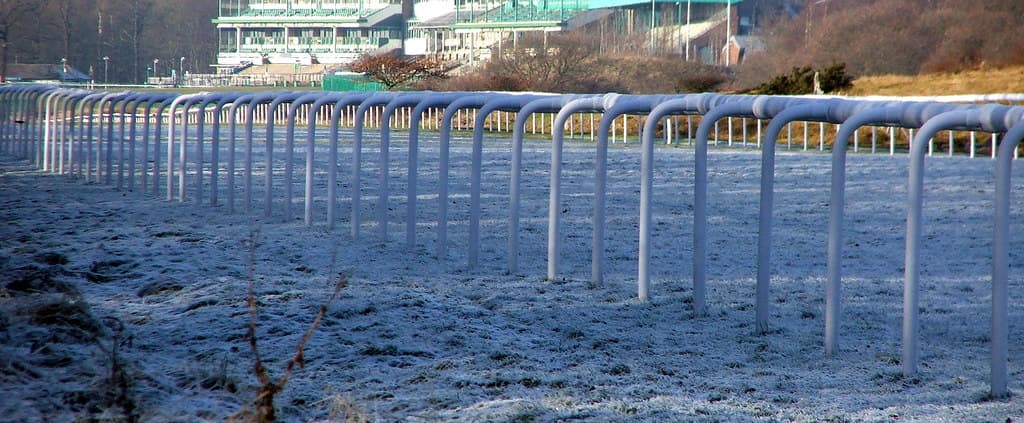
Location
Tyne and Wear, England
Code
Mixed
Direction
Left-handed
Racing
Tapeta Flat and National Hunt
Shape
Stiff, galloping Tapeta straight/oval plus jumps track
Run-in
Long, galloping finish
Quick lay view
Newcastle's Tapeta straight and galloping layout make it a good place to test whether a favourite has genuine sustained ability or just a convenient recent figure. For lay betting, surface proof, pace location, and finishing strength matter more than generic all-weather confidence.
On Tapeta, stamina and straight-track efficiency matter; question sharp-track speed horses that may not finish.
Horse-geek notes
Straight-course races can depend on where the pace sits. A short favourite away from the main tow may have to do too much alone.
Tapeta form is not identical to Polytrack or turf form. Horses can be surface-specific in both positive and negative ways.
The long straight gives time, but it also exposes horses that travel well without finding enough late.
Newcastle can protect strong, uncomplicated gallopers, especially those with course or Tapeta evidence.
A lay case is stronger when the favourite is short on recycled AW reputation but lacks current Newcastle proof.
Newcastle lay betting checklist
Check Tapeta evidence
Separate Newcastle or Tapeta form from generic all-weather form. Surface comfort is a protection signal.
Locate the pace
In straight races, being away from the main speed can matter more than stall number in isolation.
Demand finishing strength
A horse that cruises and weakens can be vulnerable because Newcastle gives the race a long time to reveal it.
Respect strong gallopers
Course-proven, straightforward runners that keep finding should not be opposed lightly.
Distance notes
5f-7f straight
Pace lanes and the main tow are central. A favourite isolated from speed is more exposed.
1m
The straight mile asks for rhythm and sustained speed. Question horses that need a bend or tactical sprint.
1m2f+
Stamina and surface efficiency become more important. A short horse without Tapeta staying proof is more interesting.
Draw and pace
Draw analysis should start with where the pace is, not a fixed high/low assumption.
Front-runners can be hard to pass if they settle and handle Tapeta.
Closers need an honest pace and enough traction to quicken late.
A horse switching from Polytrack or turf needs proof its action suits Newcastle.
Going checks
Tapeta evidence is the ground filter. Prior Newcastle runs are more relevant than broad AW labels.
Kickback and surface rhythm matter for horses likely to be covered up.
Wet-weather turf preferences should not be imported uncritically into an AW race.
Lay betting at Newcastle
Lay betting at Newcastle
Newcastle lay betting is about Tapeta proof and sustained effort. Lay Picks avoids lazy all-weather assumptions and checks whether the horse has the surface, pace, and finish to justify a short price.
Newcastle and public results
Newcastle examples are useful when the settled result shows whether the surface or pace concern mattered. Link the race back to public results before repeating the angle.
How Lay Picks handles Newcastle
The Newcastle layer supports a PLAY only when surface doubt, pace location, and current odds remain aligned after the fresh exchange check.
Lay red flags
Favourite isolated away from the main straight-course pace.
No Tapeta or Newcastle evidence at a short price.
Strong traveller with weak final-furlong records.
Surface switch from turf treated as automatic improvement.
Hold-up profile in a race without enough pace.
Best use cases
A candidate has good recent numbers but uncertain Tapeta relevance.
Straight-course pace grouping creates a specific vulnerability.
You need to decide whether AW experience is truly course-specific.
Related guides
Newcastle course notes are only one layer. Tie them back to strategy, racing tips, and responsible betting before making a manual call.
Horse racing lay strategy
Connect course notes to a full race research process with PLAY/SKIP discipline.
Read guideHorse racing lay tips
See how racecourse angles fit into a useful lay tip before opposing a runner.
Read guideResponsible lay betting
Keep course bias, liability, staking discipline, and manual control in the same decision.
Read guideBest reading path
Follow the lay betting learning route
Move through the core guides in order: basics, liability, exchange mechanics, strategy, racecourse context, and transparent results methodology.
Step 1
What is lay betting?
Start with the basic exchange concept: opposing a selection rather than backing it to win.
Open guideStep 2
Liability
Understand the amount at risk before looking at tips, strike rates, or staking.
Open guideStep 3
Exchange guide
Learn how lay odds, liquidity, matching, and commission affect a usable price.
Open guideStep 4
Strategy
Turn runner vulnerability, public checks, price, and skip discipline into a process.
Open guideStep 5
Racecourse guides
Add course shape, draw, pace, going, and distance context before trusting a lay angle.
Current stepStep 6
Results methodology
Read how settled public results are counted before judging any performance record.
Open guideOther racecourse guides
References
These are course-information and image-license references. Lay Picks turns them into original lay betting research notes and does not place bets automatically.
Lay Picks is for informed adults who want a clearer research routine. It is research and tracking software only, never automatic betting. You stay responsible for every manual decision. 18+ only. Read the risk disclaimer.